
5 Best Smart Wi-Fi Level 2 EV Chargers of 2026
Compare 5 smart Wi-Fi Level 2 EV chargers on current, cable length, app features and certifications from listings.
 By Home Power Up Team
Updated November 20, 2026

A smart Level 2 charger connects to your home Wi-Fi so you can start, stop and schedule charging from a phone, watch energy use and receive updates. This guide compares five Wi-Fi Level 2 chargers on current, cable length, app features and certifications, using manufacturer specifications and listing information.
Installing a Level 2 charger or its 240V circuit is electrical work. A licensed electrician should size the wiring and breaker, install any outlet or hardwire connection and pull the permit your area requires. Never use a household extension cord or an adapter that is not designed for EV charging. Read Level 1 vs Level 2 and do I need an electrician first.
All Products Compared
| Product | Best For | Current | Cable | Connectivity | Certifications Listed |
|---|---|---|---|---|---|
| Emporia 48A | Energy data in the app | 48A hardwired (plug version up to 40A) | 25 ft | 2.4 GHz Wi-Fi | UL listed, Energy Star |
| ChargePoint HomeFlex | App and charging network | 16 to 50A adjustable | 23 ft | Wi-Fi, ChargePoint app | UL certified, Energy Star |
| Wallbox Pulsar Plus 48A | Compact design | 48A, adjustable | 25 ft | Wi-Fi and Bluetooth | UL and Energy Star |
| Autel MaxiCharger 50A | Highest current here | 16 to 50A adjustable | 25 ft | Wi-Fi and Bluetooth | CSA, NEMA Type 4 |
| IYILO 48A | Power sharing and load balancing | 6 to 48A in 1A steps | Not stated in excerpt | 2.4 GHz Wi-Fi | UL 2594, ETL, Energy Star, CSA claimed |
| Award | Product | Price | |
|---|---|---|---|
| Best Overall |
EMPORIA Level 2 EV Charger w/ J1772 Connector
|
Buy | |
 ChargePoint HomeFlex Level 2 EV Fast Charger |
Buy | ||
| Best Value |
 Wallbox Pulsar Plus Level 2 Ev Charger 48A |
$689.99 | Buy |
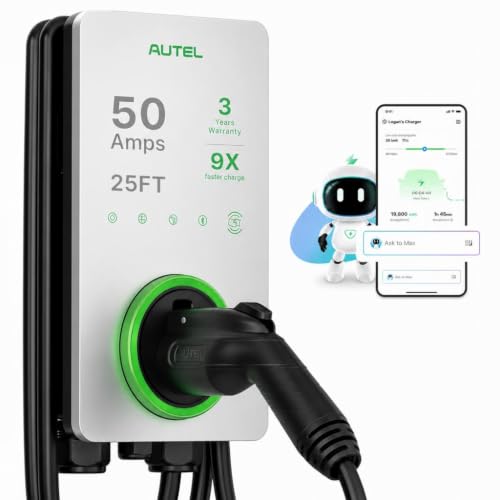 Autel Level 2 EV Charger 50A,J1772 WiFi Smart EV |
$499.00 | Buy | |
 IYILO Level 2 EV Charger, 48Amp/11.5KW/240V |
Buy |
EMPORIA Level 2 EV Charger w/ J1772 Connector
ChargePoint HomeFlex Level 2 EV Fast Charger
IYILO Level 2 EV Charger, 48Amp/11.5KW/240V
Top 3 Smart Level 2 Chargers Reviewed
#1 Emporia Level 2 EV Charger 48A: Best for Seeing Your Energy Data
Why We Picked It
The Emporia lists 48A and up to 46 miles of range per hour in the hardwired version, a 25-foot cable and a J1772 connector. It connects over 2.4 GHz Wi-Fi, shows real-time energy data on your phone and lets you schedule sessions around utility rates.
The listing says it is UL listed and Energy Star certified, and names NEC 625, SAE J1772, UL 817, UL 991, UL 2231, UL 2251 and UL 2594. A plug-in version is also listed for a NEMA 14-50 outlet up to 40A, and the listing says that version can be converted to hardwired for up to 48A.
Key Specifications
- Current: 48A hardwired (up to 40A with the NEMA 14-50 plug)
- Cable: 25 ft
- Connector: J1772
- Connectivity: 2.4 GHz Wi-Fi only
- Certifications: UL listed, Energy Star (listing)
| Pros | Cons |
|---|---|
|
|
Things to Consider
Check which version you are viewing, hardwired with whip or NEMA 14-50 plug. They have different maximum currents.
Best For
Owners who want clear energy data and a hardwired 48A charger.
Skip It If
Skip it if your router is 5 GHz only.
See the Emporia Level 2 EV Charger 48A listing for current details.
#2 ChargePoint HomeFlex Level 2 EV Charger: Best for the ChargePoint App and Network
Why We Picked It
The HomeFlex lists adjustable 16 to 50A output, a 23-foot cold-resistant cable, Wi-Fi app control and indoor or outdoor installation by an electrician. The listing says ChargePoint’s network includes more than 274,000 stations in North America and Europe, which is useful if you also charge away from home.
The listing says it is UL certified, Energy Star rated and works with all non-Tesla EVs through a J1772 connector. A NACS version is listed separately. Our Grizzl-E vs ChargePoint comparison covers the plug-in version.
Key Specifications
- Current: 16 to 50A adjustable
- Cable: 23 ft
- Connector: J1772 (NACS version listed separately)
- Connectivity: Wi-Fi and ChargePoint app
- Certifications: UL, Energy Star (listing)
| Pros | Cons |
|---|---|
|
|
Things to Consider
The listing says Wi-Fi is needed for certain functions and troubleshooting. Check your garage signal strength before you buy.
Best For
Drivers who also use public ChargePoint stations and want one app.
Skip It If
Skip it if you need a 25-foot cable.
Check the ChargePoint HomeFlex Level 2 EV Charger listing for the current specifications.
#3 Wallbox Pulsar Plus 48A: Best for a Compact Design
Why We Picked It
The Pulsar Plus lists 48A, 11.5kW, up to 45 miles of range per hour, a 25-foot cable and adjustable current. It uses Wi-Fi and Bluetooth with the Wallbox app to monitor, control and schedule charging, and the listing calls it solar energy compatible.
The listing says it is UL and Energy Star certified, safe for indoor and outdoor use through weather-resistant components and assembled in the US. It is listed as 3.9 x 7.8 x 7.9 inches, and a 40A plug-in version is sold separately.
Key Specifications
- Current: 48A, adjustable
- Power: 11.5kW
- Cable: 25 ft
- Connectivity: Wi-Fi and Bluetooth
- Certifications: UL, Energy Star (listing)
| Pros | Cons |
|---|---|
|
|
Things to Consider
The listing says weather-resistant components but gives no NEMA or IP rating, so ask the seller if the charger will be outdoors. See outdoor Level 2 chargers.
Best For
Buyers who want a small, neat unit and Bluetooth setup.
Skip It If
Skip it if you need a published outdoor enclosure rating.
See the Wallbox Pulsar Plus 48A listing for current details.
Other Options Worth Considering
The Autel MaxiCharger lists up to 50A, a 25-foot cable that stays flexible to -40 degrees, Wi-Fi and Bluetooth, CSA certification and a NEMA Type 4 rating with a 3-year warranty. The IYILO 48A lists power sharing for two chargers on one breaker, a connector temperature sensor that stops charging above 221°F and 6 to 48A adjustment, but it is a newer brand, so read its warranty terms.
How to Choose
Wi-Fi Band
Several listings state 2.4 GHz only. If your router combines bands or is 5 GHz only, check how setup works first.
Hardwired or Plug-In
A hardwired charger can use a higher current than a NEMA 14-50 plug, which listings cap at 40A. See our hardwired Level 2 chargers and plug-in Level 2 chargers.
Vehicle Connector
These J1772 chargers need an adapter for most Tesla vehicles. See Level 2 chargers for Tesla.
Offline Behavior
Ask whether charging still works if Wi-Fi drops. The Grizzl-E listing, for example, says charging works with or without an online connection.
How We Evaluate
We compared each listing’s stated current, power, cable length, connector, app features, weather rating, certifications and warranty. Charging speed, weatherproofing and certification statements are the sellers’ claims, and we have not measured these chargers ourselves. Real charging speed depends on your vehicle’s onboard charger, battery state, temperature and the circuit that feeds the charger. Compatibility notes come from the listings, so confirm the connector and your vehicle’s charge port in the owner’s manual before you buy.
Frequently Asked Questions
Do I need Wi-Fi to charge?
Most smart chargers can still charge when Wi-Fi is down, but the app, scheduling and updates may need it. Check each listing.
Can I schedule off-peak charging?
Yes, the listed apps support scheduling. Rates and rules come from your utility.
Are smart chargers faster?
No. Speed depends on amperage, your circuit and your vehicle. Read the 32A vs 40A vs 48A guide.
Do I still need an electrician?
For hardwired models, yes. Read do I need an electrician.
Can I use one with a Tesla?
Many J1772 chargers need an adapter for Tesla. Some brands sell NACS versions.
Final Verdict
The Emporia suits buyers who want energy data, the ChargePoint suits drivers who also use its network and the Wallbox suits those who want a small unit. See more in our Level 2 chargers category.
About the author

The Home Power Up team researches and writes buying guides on portable power stations, solar, generators and home backup power. We compare manufacturer specifications, listing details and published ratings to help US homeowners choose gear. We do not test products ourselves, and we explain our method in How We Review.