
Level 1 vs Level 2 EV Charging: Which Do You Need?
Level 1 vs Level 2 EV charging explained: voltage, amps, power, charge time estimates, breaker sizing and how to choose for your driving.
 By Home Power Up Team
Updated November 16, 2026
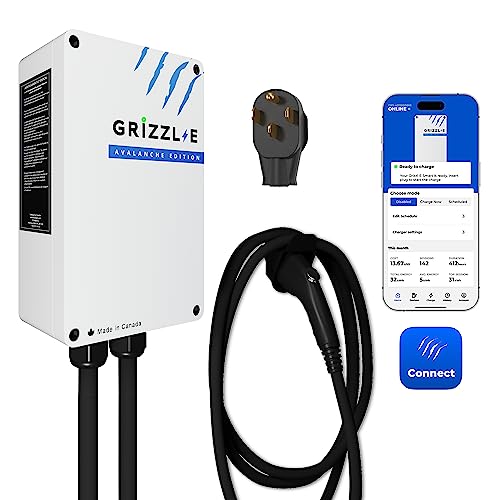
Every electric vehicle charges from the same wall power, but how fast depends on voltage and amps. Level 1 uses a standard 120V outlet and is slow. Level 2 uses 240V and is several times faster. This guide explains the difference, shows how to work out charge time, and helps you decide which level fits your driving.
Level 1 vs Level 2 at a Glance
| Level 1 | Level 2 | |
|---|---|---|
| Voltage | 120V | 240V |
| Typical current | 12A on a 15A circuit | 16A to 48A |
| Typical power | About 1.4kW | About 3.8kW to 11.5kW |
| Outlet | Standard 3-prong household | NEMA 14-50, NEMA 6-50 or hardwired |
| Best for | Overnight top-ups, low daily mileage, backup | Daily home charging, larger batteries |
| Installation | Plug into an existing outlet | Usually needs a new 240V circuit |
How Much Range Per Hour?
Power is volts times amps. The illustration below assumes a vehicle that uses about 3.5 miles per kWh and about 90 percent charging efficiency. Your vehicle will differ, so treat the figures as a guide, not a measurement.
| Charger current | Power | Approx. miles per hour | Hours to add 40kWh |
|---|---|---|---|
| Level 1, 12A at 120V | 1.4kW | about 4.5 | about 31 |
| Level 2, 16A at 240V | 3.8kW | about 12 | about 12 |
| Level 2, 24A at 240V | 5.8kW | about 18 | about 8 |
| Level 2, 32A at 240V | 7.7kW | about 24 | about 6 |
| Level 2, 40A at 240V | 9.6kW | about 30 | about 5 |
| Level 2, 48A at 240V | 11.5kW | about 36 | about 4 |
The vehicle’s onboard charger can also cap the rate. A car that accepts 7.2kW charges no faster on a 48A station.
Which Level Do You Need?
Level 1 is enough if
- You drive under about 30 miles a day.
- You park for 10 hours or more overnight.
- You use a plug-in hybrid with a small battery.
- You want a backup charger in the trunk.
Choose Level 2 if
- You drive more than 40 miles most days.
- You have a larger battery and short parking windows.
- You want to take advantage of off-peak rates.
- You plan to add a second EV.
Matching the Charger to the Circuit
A continuous load such as EV charging should use no more than 80 percent of the circuit’s rating. That means the breaker must be about 25 percent above the charger current.
| Charger setting | Minimum breaker |
|---|---|
| 12A | 15A |
| 16A | 20A |
| 24A | 30A |
| 32A | 40A |
| 40A | 50A |
| 48A | 60A |
Connecting a Level 2 charger to your home’s wiring is electrical work. A licensed electrician should install the circuit or outlet, size the breaker and pull any permit your area requires. Never use a household extension cord with an EV charger. See do I need an electrician for a Level 2 EV charger.
Plug-In or Hardwired?
Plug-in chargers use a NEMA 14-50 outlet and can be unplugged and moved. See plug-in Level 2 chargers. Hardwired chargers connect directly to the circuit and suit higher currents. See hardwired 48A chargers. For travel and flexibility, portable Level 1 and 2 chargers cover both outlets.
Frequently Asked Questions
Is Level 1 charging bad for the battery?
No. It is slower, not harmful.
Can I use Level 2 on a regular outlet?
No. Level 2 needs a 240V circuit. A dual-level portable charger uses an adapter on 120V and then charges at Level 1 speed.
Which connector does my car use?
Most non-Tesla vehicles use J1772. Tesla vehicles use NACS and may need an adapter.
Does a faster charger save money?
It can help you charge off-peak, but the cost per kWh is set by your utility.
How do I pick a charger?
Match it to your circuit and your vehicle’s onboard charging limit.
Final Verdict
Level 1 works for low mileage and overnight parking, and Level 2 suits daily driving. Pick the charger setting your circuit can carry, and have the circuit installed by a licensed electrician. Browse our Level 2 chargers category for more.
About the author

The Home Power Up team researches and writes buying guides on portable power stations, solar, generators and home backup power. We compare manufacturer specifications, listing details and published ratings to help US homeowners choose gear. We do not test products ourselves, and we explain our method in How We Review.