
6 Best Portable Power Stations for RV of 2026
Six 1 to 2kWh portable power stations compared for RV and trailer use on output, RV-style sockets, alternator and solar charging, weight and warranty.
 By Home Power Up Team
Updated November 11, 2026
RV power is its own problem. You may want to run lights, fans, a laptop and a fridge at a campsite without hookups, recharge from the road or solar, and fit the unit into a cramped storage bay. This guide compares six 1 to 2kWh power stations for RV and travel trailer use from manufacturer specifications and listing information, and is honest about what they cannot do.
A portable power station will not run a full-size RV air conditioner for long. Rooftop units draw hundreds to over a thousand watts plus a start surge, and they empty a 1 to 2kWh battery in an hour or two. Plan your battery around lights, fans, electronics and a fridge, and use hookups or a generator for air conditioning. Do not connect a power station to an RV’s wiring unless the maker allows it and a qualified installer does it.
For van setups see our van life guide, and for fuel-based options see inverter generators. Browse the mid-size power stations category for related guides.
All Products Compared
| Product | Best For | Capacity | AC Output | Weight | RV-Relevant Feature |
|---|---|---|---|---|---|
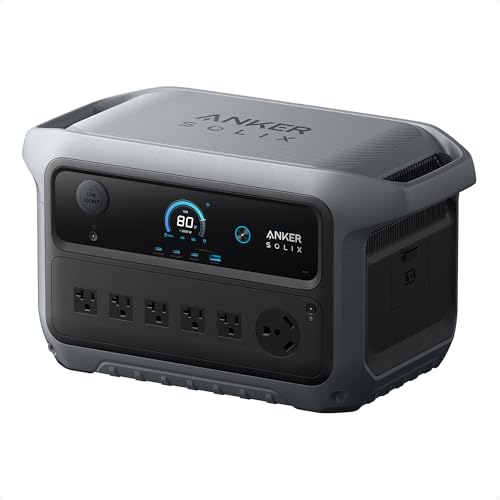
| Anker SOLIX C2000 Gen 2 | RV hookup and alternator charging | 2,048Wh | 2,400W, 4,000W peak | About 41.7 lb | TT-30 socket, 800W alternator charging |
| AFERIY P280 | Dual solar inputs | 2,048Wh | 2,800W, 5,600W peak | 44 lb | 1,200W solar input, 1,800W AC input |
| Jackery Explorer 2000 v2 | Lightest 2kWh in its listing | 2,042Wh | 2,200W | 39.5 lb | Three AC ports, 400W solar for 6 hours |
| BLUETTI AC180 | Solar kit and car cable | 1,152Wh | 1,800W, 2,700W boost | 37.4 lb | Car charging cable in the box |
| ALLPOWERS P1800 | Many outlets | 1,024Wh | 1,800W, 3,600W surge | 28.7 lb | 12V/24V car charging, 650W solar |
| EcoFlow DELTA 3 | Fast charging, expansion | 1,024Wh | 1,800W | About 27.6 lb | 500W solar, 1,500W AC input |
| Award | Product | Price | |
|---|---|---|---|
| Best Premium |
Anker SOLIX C2000 Gen 2 Solar Powered Generator
|
$949.99 | Buy |
| Best Overall |
 AFERIY P280 Portable Power Station 2800W |
$739.00 | Buy |
 Jackery Explorer 2000 v2 Portable Power Station |
$999.00 | Buy | |
 BLUETTI AC180 Portable Power Station 1152Wh 1800W |
$449.00 | Buy | |
| Best Budget |
 ALLPOWERS P1800 Portable Power Station, 1024Wh |
$419.00 | Buy |
| Best Value |
 EF ECOFLOW Delta 3 Portable Power Station |
$579.00 | Buy |
Anker SOLIX C2000 Gen 2 Solar Powered Generator
AFERIY P280 Portable Power Station 2800W
Jackery Explorer 2000 v2 Portable Power Station
BLUETTI AC180 Portable Power Station 1152Wh 1800W
ALLPOWERS P1800 Portable Power Station, 1024Wh
EF ECOFLOW Delta 3 Portable Power Station
Top 3 Portable Power Stations for RV Reviewed
#1 Anker SOLIX C2000 Gen 2: Best Overall
Why We Picked It
The C2000 Gen 2 is the only unit here whose listing names a TT-30 socket, the 30A RV-style receptacle, alongside 2,048Wh of LFP storage, 2,400W (4,000W peak) output and 800W alternator charging that Anker lists as a full charge in about 3 hours. Anker also lists AC and solar recharge in about 58 minutes, idle draw of 9W and expansion to 4kWh.
The product details give about 41.7 lb and 18.1 x 9.8 x 10.1 inches. The TT-30 socket is an outlet on the unit, not a way to wire it into an RV, so follow the manual. Compared with the AFERIY, it adds RV-style outputs and alternator charging but lists less output.
Key Specifications
- Capacity: 2,048Wh LiFePO4, expandable to 4kWh
- Output: 2,400W, 4,000W peak
- Sockets: includes TT-30
- Alternator charging: 800W, full charge in about 3 hours, per the listing
- Weight: about 41.7 lb
| Pros | Cons |
|---|---|
|
|
Things to Consider
Alternator charging draws heavy current from a vehicle and needs the correct cable and fusing from the maker. Do not improvise this wiring.
Best For
RV and trailer owners who want a 30A-style socket and road charging.
Skip It If
Skip it if you only want a lighter 1kWh unit.
See the Anker SOLIX C2000 Gen 2 listing for current details.
#2 AFERIY P280: Best for Solar and Output
Why We Picked It
The P280 lists 2,048Wh of LFP storage, 2,800W of pure sine wave output with 5,600W peak, 1,800W AC input, dual PV inputs totaling 1,200W and a UPS response under 10ms. AFERIY says it charges from 0 to 80 percent in 38 minutes and expands to 10.24kWh.
The product details give 44 lb and 15.43 x 11 x 12.72 inches, and the listing states 4,000+ cycles. Dual PV inputs let you connect two separate solar strings without an external combiner, which can suit RV roofs. Against the Anker, it lists more output and solar input but no TT-30 socket or alternator charging.
Key Specifications
- Capacity: 2,048Wh LFP, expandable to 10.24kWh
- Output: 2,800W, 5,600W peak
- Solar: dual PV inputs, 1,200W total
- Recharge: 80 percent in 38 minutes by AC, per the listing
- Weight: 44 lb
| Pros | Cons |
|---|---|
|
|
Things to Consider
Check each solar input’s voltage and current limits against your panels, and read the warranty terms, which the excerpt we reviewed does not give.
Best For
RV owners building a solar roof who want high output.
Skip It If
Skip it if you want a TT-30 socket or the lightest 2kWh unit.
Review the AFERIY P280 listing for the current specifications.
#3 Jackery Explorer 2000 v2: Best for Lighter Carry
Why We Picked It
The Explorer 2000 v2 lists 2,042Wh, 2,200W across three AC ports and a 100W USB-C port. Jackery says it weighs 39.5 lb and is 41 percent lighter and 34 percent smaller than typical 2kWh LiFePO4 units. It lists an 80 percent charge in 66 minutes, solar in as few as 6 hours with 400W of panels and a silent charging mode under 30dB.
Against the Anker, it is a couple of pounds lighter and quieter to charge, but the excerpt does not list alternator charging or an RV socket.
Key Specifications
- Capacity: 2,042Wh LiFePO4
- Output: 2,200W across three AC ports
- Weight: 39.5 lb
- Recharge: 80 percent in 66 minutes as listed
- Noise: silent charging mode under 30dB, per the listing
| Pros | Cons |
|---|---|
|
|
Things to Consider
Even at 39.5 lb, loading it into a storage bay takes care. Measure the space and allow clearance for airflow.
Best For
Trailer owners who want a lighter 2kWh unit.
Skip It If
Skip it if you need an RV-style socket.
Check the Jackery Explorer 2000 v2 listing for the latest specifications.
Other Options Worth Considering
The BLUETTI AC180 lists 1,152Wh, 1,800W with 2,700W boost, 1,440W AC input, 500W solar input, a 5-year warranty and a car charging cable in the box at 37.4 lb. It lists a UPS function at 20ms, and the outlet count differs between the title and the bullets.
The ALLPOWERS P1800 lists 1,024Wh, four AC outlets, 12V/24V car charging and 650W of solar input at 28.7 lb. The EcoFlow DELTA 3 lists 1,024Wh, 500W solar and 1,500W AC input and expansion to 5kWh at about 27.6 lb.
How to Choose a Power Station for an RV
Do Not Plan Around Air Conditioning
RV air conditioners draw a lot and start with a surge. A power station of 1 to 2kWh may run one briefly, but not through a night. Smaller tent or camping units draw less. Check the BTU unit’s running watts and use a generator or shore power for full-size units.
Build an Energy Budget
List lights, fans, laptops, a fridge and a CPAP with watts and hours. Add them up and divide into usable capacity (about 85 percent of the label). Our 1000Wh runtime guide shows the method.
Recharging on the Road and Off Grid
Look at alternator charging, AC recharge speed and solar input limits. Panels for RV roofs or ground use are covered in portable solar panels.
Sockets
A TT-30 socket matches many RV plugs, but check the unit’s rating and the load. Standard 5-20R outlets suit most household devices.
Weight, Mounting and Ventilation
Secure the unit so it cannot slide or tip while driving, keep it away from heat and flammable materials, and give it airflow. Do not store it in a sealed compartment.
How We Evaluate Power Stations for RVs
We compared manufacturer specifications, listing information and published ratings, weighing capacity, output, RV-style sockets, alternator and solar charging, battery chemistry claims, weight, warranty and the clarity of the specifications. Where listings omit details or disagree with themselves, we say so. Confirm capacity, output, sockets and warranty for the exact model before you buy.
Frequently Asked Questions
Can a power station run an RV air conditioner?
Briefly at best, depending on the AC and the unit. Rooftop units draw several hundred to over a thousand watts plus a start surge.
How big a power station do I need for an RV?
It depends on your daily energy budget. Many start around 1 to 2kWh for lights, fans, electronics and a fridge. See what size power station you need.
Can I charge it from my vehicle?
Some units support alternator or 12V charging, and some need an optional cable. Check the exact unit.
Can I connect a power station to my RV wiring?
Only if the maker allows it and a qualified installer does it. Otherwise plug appliances in directly.
Generator or power station for an RV?
A generator runs longer but needs fuel and outdoor placement. See inverter generators.
Final Verdict
The Anker SOLIX C2000 Gen 2 is the top pick for RVs, based on its TT-30 socket and alternator charging. The AFERIY P280 suits solar-heavy builds, and the Jackery Explorer 2000 v2 is the lighter alternative.
Before buying, plan your energy budget, and compare more options in our mid-size power stations category.
About the author

The Home Power Up team researches and writes buying guides on portable power stations, solar, generators and home backup power. We compare manufacturer specifications, listing details and published ratings to help US homeowners choose gear. We do not test products ourselves, and we explain our method in How We Review.