
5 Best Battery CO Alarms for Generator Safety
Compare 5 battery carbon monoxide alarms and detectors for homes that run generators, with placement and safety notes.
 By Home Power Up Team
Updated November 18, 2026
A generator makes carbon monoxide (CO), a gas you cannot see or smell. Most guidance says to run the generator outdoors, far from the house, and to have working CO alarms inside as a backup. An alarm is a backup, not permission to run a generator near the home. This guide compares five battery-powered CO alarms and detectors from their listings.
Alarm Basics
- Never run a generator in a garage, basement, crawlspace or enclosed space, even with doors open. Exhaust contains deadly carbon monoxide. Keep it outdoors and well away from windows, doors and vents.
- Battery-powered alarms keep working through a power outage.
- Install alarms the way the manual says, usually on each level and near sleeping areas.
- If an alarm sounds, move everyone outdoors into fresh air and call emergency services.
- Replace alarms on the maker’s schedule. Many state a limited life.
All Products Compared
| Product | Power | Display | Notable Feature | Listing Notes |
|---|---|---|---|---|
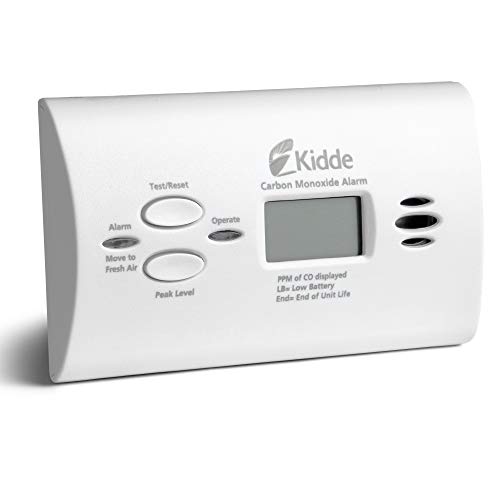
| Kidde AA Battery CO Alarm | 2 AA batteries | LED status lights | Peak level memory, 85 dB | UL listed, 10-year warranty on the alarm |
| Kidde COBD | 2 AA batteries | Backlit digital display | Travel-ready, 85 dB | UL 2034 5th edition, ETL listed |
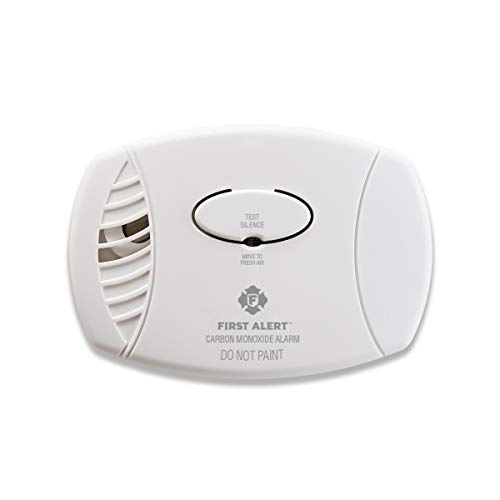
| First Alert CO400 | Battery | Not stated | Simple battery alarm | Listing excerpt is sparse |
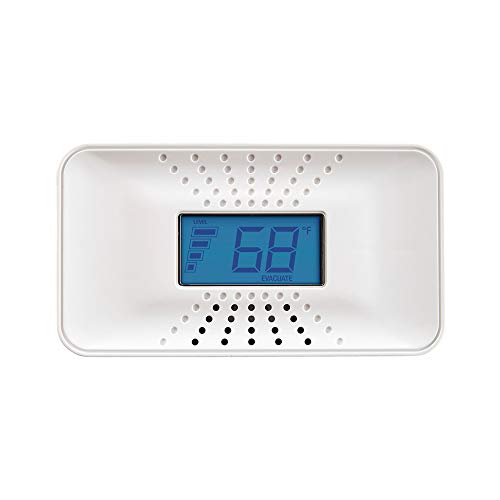
| First Alert CO710 | Built-in 10-year battery | Digital display | Shows temperature and CO level | 85 dB alarm |
| TOPTES CT-580 | Rechargeable USB-C | Color display | Handheld, 0 to 1000 PPM | Described as a manual inspection tool |
| Award | Product | Price | |
|---|---|---|---|
| Best Overall |
Kidde Carbon Monoxide Detector
|
$27.97 | Buy |
| Best Value |
 Kidde Carbon Monoxide Detector |
$30.47 | Buy |
| Best Budget |
 First Alert Battery Carbon Monoxide Alarm | CO400 |
$21.99 | Buy |
| Best Premium |
 First Alert 10-Year Battery Carbon Monoxide Alarm |
$44.49 | Buy |
 TOPTES CT-580 Portable Carbon Monoxide Detector |
$65.99 | Buy |
Top 3 CO Alarms Reviewed
#1 Kidde AA Battery CO Alarm: Best Basic Battery Alarm
Why We Picked It
The Kidde battery alarm uses an electrochemical sensor, runs on two included AA batteries with no wiring, and sounds an 85-decibel alarm with a red LED. It has peak level memory and a test-hush button, and the listing says it is UL listed with a 10-year limited warranty on the alarm only.
It mounts on a wall or sits on a table, and it is portable. Replace it by the maker’s date, since the warranty clock starts when the alarm is powered on.
Key Specifications
- Power: 2 AA batteries, included
- Alarm: 85 dB
- Features: peak level memory, test-hush button
- Mounting: wall or tabletop
- Listing: UL listed, 10-year limited warranty
| Pros | Cons |
|---|---|
|
|
Things to Consider
Follow the manual for placement, and replace batteries on schedule.
Best For
Homes that want a simple backup alarm for generator use.
Skip It If
Skip it if you want a CO reading on a display.
See the Kidde AA Battery CO Alarm listing for current details.
#2 Kidde COBD: Best Alarm With a Display
Why We Picked It
The COBD is a battery-powered CO alarm with a backlit digital display, LED status lights and an 85 dB alarm. It runs on two included AA batteries, has a test and hush button, and the listing says it meets UL 2034 5th edition and is ETL listed, with a 10-year limited warranty on the alarm.
It is lightweight at 0.37 lb, and the listing says it suits home use and travel, for example in hotels or rentals.
Key Specifications
- Power: 2 AA batteries, included
- Display: backlit digital
- Alarm: 85 dB
- Listing: UL 2034 5th edition, ETL listed
- Weight: 0.37 lb
| Pros | Cons |
|---|---|
|
|
Things to Consider
A display helps you see the reading, but you still need to act if the alarm sounds.
Best For
Households that want a display and a portable alarm.
Skip It If
Skip it if you only want the lowest-cost alarm.
Check the Kidde COBD listing for current specifications.
#3 First Alert CO710: Best for Built-In Battery Life
Why We Picked It
The CO710 has a built-in 10-year battery that the listing says offers continuous protection for the life of the detector, a backlit digital LED display for temperature and CO concentration, and an 85 dB alarm. It is designed to sit on a dresser or table.
The date on the unit is the manufacture date, which helps you track when to replace it. Because the battery is sealed, you replace the whole unit at end of life.
Key Specifications
- Power: built-in 10-year battery, per the listing
- Display: backlit digital, temperature and CO level
- Alarm: 85 dB
- Placement: table or dresser
- Weight: 0.4 lb
| Pros | Cons |
|---|---|
|
|
Things to Consider
Check the manufacture date when you buy so the 10-year clock is not already running.
Best For
People who do not want to change batteries.
Skip It If
Skip it if you prefer replaceable batteries.
See the First Alert CO710 listing for the current details.
Other Options Worth Considering
The First Alert CO400 is a battery CO alarm, but the listing excerpt we reviewed gives little beyond its manufacture date, so check the full listing for details. The TOPTES CT-580 is a rechargeable handheld detector that reads 0 to 1000 PPM with light, sound and vibration alarms, a color display and a flashlight. The listing calls it a manual inspection tool, so treat it as a spot-check device and not as your only home alarm.
How to Choose a CO Alarm
Power
Battery alarms work during outages. A sealed 10-year battery avoids changes but means replacing the unit.
Listing and Standards
Look for UL 2034 or equivalent certification named on the listing.
Display
A digital display shows readings, but the alarm is the important part.
Placement
Follow the manual. Place alarms on each level and near sleeping areas.
Replacement
Check the manufacture date and replace by the maker’s schedule.
How We Evaluate
We compared listing information, power source, alarm loudness, display, standards named, warranty and the clarity of each listing. Standards and warranty claims are the sellers’ claims, and we have not measured these alarms ourselves. For safety guidance, follow the alarm manual and local advice.
Frequently Asked Questions
Do I need a CO alarm if I run a generator outside?
Yes. Wind can carry exhaust toward the home, and an alarm is a backup.
How far should a generator be from the house?
Keep it outdoors, well away from windows, doors and vents, and follow the generator manual.
Can a CO alarm replace safe generator use?
No. It is a backup. Never run a generator indoors or in an enclosed space.
What do I do if the alarm sounds?
Get everyone outdoors into fresh air and call emergency services.
How often should I replace an alarm?
Follow the maker’s schedule and the date on the unit.
Final Verdict
The Kidde battery alarm is a simple backup, the Kidde COBD adds a display, and the First Alert CO710 avoids battery changes. Keep the generator outdoors and away from the home. See our guides to generator covers and inverter generators.
About the author

The Home Power Up team researches and writes buying guides on portable power stations, solar, generators and home backup power. We compare manufacturer specifications, listing details and published ratings to help US homeowners choose gear. We do not test products ourselves, and we explain our method in How We Review.