
7 Best 500Wh Portable Power Stations of 2026
Seven portable power stations from 512 to 640Wh compared on output, ports, UPS function, weight and recharging, using manufacturer specifications.
 By Home Power Up Team
Updated November 11, 2026

A 500Wh power station is a step up from the pocket-size units: enough stored energy for a CPAP overnight, a laptop all day or a router through an evening outage, while still carrying like a small cooler. This guide compares seven units from roughly 512 to 640Wh using manufacturer specifications and listing information, and notes where listings disagree with themselves.
For the sizing math behind these numbers, read what size power station you need and how long a power station runs a CPAP. If you are weighing a lighter option, the 300Wh roundup covers the smaller class, and the small power stations category collects related guides.
All Products Compared
| Product | Best For | Capacity | AC Output | Weight | Notable Feature |
|---|---|---|---|---|---|
| Jackery Explorer 600 v2 | Light carry with brand support | 640Wh | 2 x 500W, 1,000W surge | Not listed | Dual 100W USB-C, 0.01s switchover |
| LIBRIDS C600 | Most capacity and ports | 640Wh | 600W, 1,200W surge | 16.3 lb | 4 AC outlets, 4,000+ cycle claim |
| AFERIY Nomad800 | Highest output | 512Wh | 800W, 1,600W peak | About 14.3 lb | 400W AC input, 10ms UPS |
| ALLWEI 512Wh | Two AC outlets, lighter body | 512Wh | 2 x 500W, 1,000W surge | About 13 lb | 100W USB-C, UPS function |
| MARSRIVA MP6 Plus | Fast recharge | 512Wh | 600W, 1,200W peak | About 15.7 lb | 0 to 90% in about 1 hour, per listing |
| GRECELL 519Wh | Wireless charging pad | 519Wh | 2 x 500W, 1,000W peak | About 14.1 lb | 10 ports including wireless pad |
| EBL 519Wh | Similar layout to GRECELL | 519Wh | 2 x 500W, 1,000W peak | Listing varies | 10 ports, 60W USB-C PD |
| Award | Product | Price | |
|---|---|---|---|
|
Jackery Explorer 600 v2 Portable Power Station
|
Buy | ||
| Best Budget |
 LIBRIDS Portable Power Station C600 |
$239.99 | Buy |
| Best Premium |
 AFERIY Portable Power Station 800W(1600W Peak) |
$278.98 | Buy |
 ALLWEI Portable Power Station 500W |
$299.00 | Buy | |
| Best Overall |
 MARSRIVA Portable Power Station |
$259.99 | Buy |
 Portable Power Station 500W (Peak 1000W) |
$249.99 | Buy | |
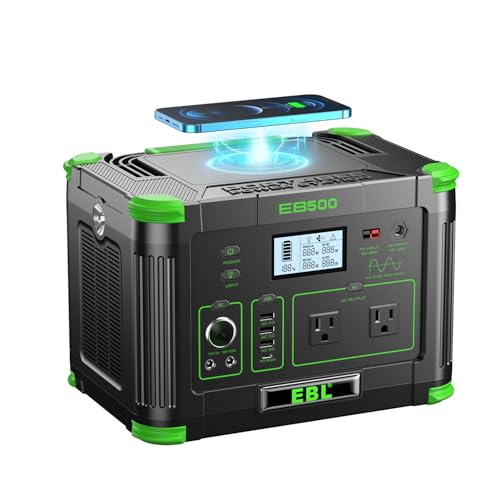 EBL Portable Power Station 500w(Peak 1000W) |
$249.99 | Buy |
Jackery Explorer 600 v2 Portable Power Station
LIBRIDS Portable Power Station C600
AFERIY Portable Power Station 800W(1600W Peak)
ALLWEI Portable Power Station 500W
MARSRIVA Portable Power Station
Portable Power Station 500W (Peak 1000W)
EBL Portable Power Station 500w(Peak 1000W)
Top 3 500Wh Portable Power Stations Reviewed
#1 Jackery Explorer 600 v2: Best Overall
Why We Picked It
The Explorer 600 v2 pairs 640Wh of LFP capacity with a clean port layout. The listing describes dual 500W AC outlets with a 1,000W surge rating, two 100W USB-C ports and six ports in total, plus recharging by AC, solar or car. Jackery also states an operating range of -4°F to 113°F and a 0.01 second switchover for computers and other sensitive loads.
Jackery calls it the world’s lightest 600Wh LFP power station. That is a manufacturer claim, and the listing we reviewed does not give a weight, so check the product page before you rely on it. Compared with the LIBRIDS C600, it offers two 100W USB-C ports where the LIBRIDS offers more AC outlets.
Key Specifications
- Capacity: 640Wh LFP
- AC output: two outlets, 500W rated, 1,000W surge
- Ports: six in total, including two 100W USB-C
- Recharging: AC, solar or car
- Operating range: -4°F to 113°F, per the manufacturer
| Pros | Cons |
|---|---|
|
|
Things to Consider
A 500W rating covers most laptops, lights, fans and CPAP machines but not a space heater, hair dryer or microwave. Confirm the solar input limit for the exact model before you buy panels.
Best For
Buyers who want a well-known brand, high USB-C output and 640Wh of capacity for camping or short outages.
Skip It If
Skip it if you need to run more than 500W at once or want a published weight before ordering.
Check the Jackery Explorer 600 v2 listing for current details.
#2 LIBRIDS C600: Best for Capacity and Ports
Why We Picked It
The C600 lists 640Wh, a 600W pure sine wave output with 1,200W surge, four AC outlets and eight output ports. The manufacturer states a 10ms UPS switchover, recharge in as little as 1.5 hours and a metal housing. The listing gives 16.3 lb and 8.3 x 7.1 x 8.1 inches.
LIBRIDS claims more than 4,000 charge cycles while retaining over 80 percent of capacity, and a 5-year limited warranty. Those are manufacturer figures, so read the warranty terms. It has more AC outlets and 100W more continuous output than the Explorer 600 v2, but it is a less established name.
Key Specifications
- Capacity: 640Wh LiFePO4
- AC output: four outlets, 600W rated, 1,200W surge
- Ports: eight in total
- Recharging: AC, solar (XT60), car or gas generator, with combined AC and solar input
- Weight: 16.3 lb
- Warranty: 5-year limited, per the listing
| Pros | Cons |
|---|---|
|
|
Things to Consider
The listing says to keep the total load under 600W. Because it is a newer brand, read recent buyer comments on support and warranty handling before you commit.
Best For
Households that want several AC outlets for a router, lamp, fan and a laptop charger at the same time.
Skip It If
Skip it if you want the lightest unit or a brand with years of support history.
See the LIBRIDS C600 listing for the latest details.
#3 AFERIY Nomad800: Best for Higher Output
Why We Picked It
The Nomad800 trades some capacity for output. The listing describes 512Wh of LiFePO4 storage, an 800W pure sine wave AC outlet with 1,600W peak, a bidirectional inverter with up to 400W AC input, and a 10ms UPS function. Charging options include up to 200W of solar, 120W from a car port and a combined AC and solar mode the listing says can fill the unit in about an hour.
Ports listed are one AC outlet, three USB-C (100W and 20W), two USB QC3.0, a DC6530 port and a car outlet. AFERIY states more than 3,500 cycles and lists UL, CE, FCC, PSE, RoHS and TELEC certifications, which are manufacturer statements. The product details list 14.33 lb. Against the two 640Wh picks, you give up capacity for 800W of continuous output.
Key Specifications
- Capacity: 512Wh LiFePO4
- AC output: one outlet, 800W rated, 1,600W peak
- AC input: up to 400W
- Solar input: up to 200W
- Weight: about 14.3 lb
- UPS: 10ms switchover, per the manufacturer
| Pros | Cons |
|---|---|
|
|
Things to Consider
Output is not runtime. An 800W load empties about 435Wh of usable energy in roughly half an hour. Check the certification claims against the manufacturer’s documentation if safety listings matter to you.
Best For
People who need to run one higher-draw device, such as a small power tool or a kettle-class load within 800W, and want fast recharging.
Skip It If
Skip it if you need several AC outlets or the most runtime per charge.
Review the AFERIY Nomad800 listing for current specifications.
Other Options Worth Considering
The ALLWEI 512Wh lists two 500W AC outlets, a 100W USB-C port, a UPS function, 3,000 cycles to 70 percent capacity and about 13 lb. The bullet text and the product details give different dimensions, so verify them before you plan around a tight space.
The MARSRIVA MP6 Plus lists 512Wh, 600W with 1,200W peak, a 100W USB-C port, a built-in MPPT solar controller, under 10ms UPS and a 5-year warranty. Its charge from 0 to 90 percent in about an hour is a listing claim.
The GRECELL 519Wh and EBL 519Wh share nearly identical listings: two 500W AC outlets, 60W USB-C PD, three USB-A ports, two DC ports, a car port and a 10W wireless pad. Neither lists a UPS function. GRECELL gives 14.1 lb, while EBL lists 14.1 lb in its text and 18 lb in its product details, so confirm the weight with the seller.
How to Choose a 500Wh Portable Power Station
Usable Capacity
A 512 or 640Wh label does not mean that much is available to your devices. Count about 85 percent after inverter losses, which leaves roughly 435Wh on a 512Wh unit and 545Wh on a 640Wh unit. Divide by the load in watts for an estimate: a 60W laptop runs about 7 to 9 hours, a 15W router more than a day, and a 100W device about 4 to 5 hours. Real results vary with load, temperature and battery age.
Continuous and Surge Output
Rated output is what the unit can carry steadily, and surge covers short motor start-ups. Add up everything you plan to run at once and leave margin. See what a 300 watt power station can run for typical device draws, and scale up for the 500 to 800W range.
UPS Function
A listed UPS or EPS switchover lets the unit act as a battery backup for a router or desktop. Switchover times are manufacturer claims, and units without a UPS function can briefly drop power when the grid fails.
Battery Chemistry and Cycles
Most units here use LiFePO4, generally rated for more cycles than standard lithium-ion. The cycle counts and the capacity retained at the end of that life differ by listing, so compare them on the same basis. Our LiFePO4 vs lithium-ion guide explains the trade-offs.
Weight, Warranty and Recharging
This class weighs about 13 to 16 lb. Compare warranty length, AC recharge time and the solar input limit if you plan to add portable solar panels. If you use a CPAP, check the machine’s label for its power draw and confirm compatibility with its maker before relying on any power station.
How We Evaluate 500Wh Portable Power Stations
We compared manufacturer specifications, listing information and published ratings, weighing capacity, output and outlets, UPS function, recharge options, battery chemistry claims, weight, warranty and the clarity of the specifications. Where listings disagree with themselves, we say so. Confirm capacity, output, ports and warranty for the exact model before you buy.
Frequently Asked Questions
What can a 500Wh power station run?
Phones, laptops, lights, a router, a small fan and often a CPAP machine, within the rated output. See what a 300 watt power station can run for a device list.
How long does a 500Wh power station last?
It depends on the load. Divide roughly 85 percent of the rated capacity by the device’s watts. Our chart in how long a 300Wh power station lasts shows the method, and you can scale it up.
Is 500Wh enough for a weekend of camping?
For phones, lights, a camera and a fan, usually. Adding a CPAP or a cooler changes the math. See whether 300Wh is enough for camping for the reasoning.
Can one run a CPAP all night?
Often, depending on the machine and whether the humidifier is on. Check the label for the power draw and ask the machine’s maker about compatibility. Our CPAP runtime guide explains how to estimate it.
Can I use one during a power outage?
For essentials like a router, lights and phone charging, yes. It will not run a whole home. See using a small power station in an outage.
Final Verdict
The Jackery Explorer 600 v2 is the top pick for this class, based on its 640Wh capacity, dual 100W USB-C ports and an established brand. The LIBRIDS C600 is the choice for outlets and rated output at the same capacity, and the AFERIY Nomad800 suits buyers who need 800W from a smaller battery.
Before buying, match capacity and output to your own devices with what size power station you need, and compare more options in our small power stations category.
About the author

The Home Power Up team researches and writes buying guides on portable power stations, solar, generators and home backup power. We compare manufacturer specifications, listing details and published ratings to help US homeowners choose gear. We do not test products ourselves, and we explain our method in How We Review.