
Westinghouse 7500 Peak Watt EFI Dual Fuel Generator Review: Specs, Pros and Cons
Westinghouse 7500 EFI dual fuel generator review: 6000 running watts, EFI, remote start, 3-year warranty, pros and cons.
 By Home Power Up Team
Updated November 20, 2026

The Westinghouse 7500 Peak Watt EFI dual fuel generator is a 139 lb portable unit with electronic fuel injection, remote key fob starting and outlets for a home transfer switch and an RV. This review uses the seller’s listing to explain what it offers and where it falls short. We have not run it ourselves. It is one of the picks in our 5000 to 8000 watt generator guide.
Quick Verdict
A well-equipped dual fuel generator with clear running watt figures, EFI for easier starting and a 3-year warranty. The trade-offs are lower running watts than the WEN, a heavy 139 lb body and runtime figures that are the seller’s claims.
Westinghouse 7500 Peak Watt EFI Dual Fuel Home


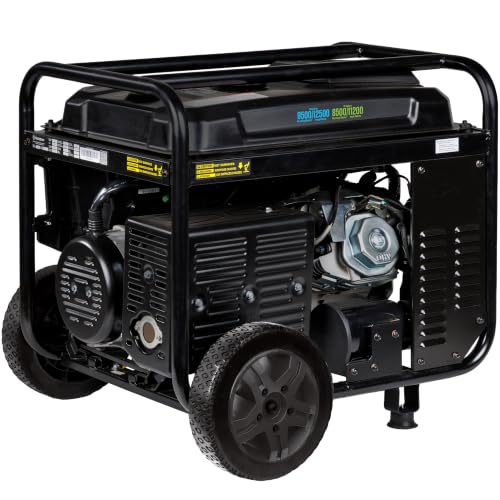
As an Amazon Associate we earn from qualifying purchases. Product prices and availability are accurate as of the date/time indicated.
Key Specifications
| Spec | Listing details |
|---|---|
| Gasoline | 7500 peak, 6000 running watts |
| Propane | 6750 peak, 5400 running watts |
| Engine | 298cc OHV, cast iron sleeve, EFI |
| Start | Remote key fob, electric, recoil |
| Runtime | Up to 14 hours on 4.75 gal gas, 9.5 hours on a 20 lb propane tank |
| Outlets | L14-30R 120/240V 30A, TT-30R 30A RV, 5-20R duplex |
| Safety | CO sensor, low-oil shutdown |
| Weight | 139 lb |
| Warranty | 3 years limited |
What It Does Well
EFI Starting
The listing says EFI removes the choke and carburetor and makes starting easier, with a key fob as well as electric and recoil starting.
Outlets
A transfer-switch-ready L14-30R outlet, an RV outlet and a household duplex cover home backup and camping.
Compliance and Support
It is described as CARB compliant in all 50 states, with a 3-year limited warranty and a nationwide customer service network.
Things to Consider
- Running watts are 6000 on gasoline and 5400 on propane. Size to these, not the 7500 peak.
- At 139 lb it needs wheels and a flat spot.
- Runtime depends on load and is the seller’s claim.
- Run it outdoors, 20 feet from the house, never in a garage.
Who Should Buy It
Households that want easy starting, CARB compliance and a 30-amp transfer switch outlet.
Who Should Skip It
Skip it if you want the highest running watts or a lighter unit. See the other options.
How It Compares
Against the WEN DF8000X, the Westinghouse has lower rated watts but adds EFI and remote start. See running vs starting watts and read how to run a generator safely during a power outage before you use it.
Frequently Asked Questions
Can it run my fridge and sump pump?
Probably, if the total running and surge watts fit. See our sizing guide.
Does it run on propane?
Yes, at lower watts than gasoline.
Can I connect it to my house?
Only through a transfer switch or interlock installed by an electrician.
Is it quiet?
The excerpt gives no noise figure. It is an open-frame generator.
How long does the tank last?
The listing says up to 14 hours, depending on load.
Final Verdict
The Westinghouse 7500 EFI is a good fit for buyers who value easy starting and clear specs. Compare it in our 5000 to 8000 watt guide.
About the author

The Home Power Up team researches and writes buying guides on portable power stations, solar, generators and home backup power. We compare manufacturer specifications, listing details and published ratings to help US homeowners choose gear. We do not test products ourselves, and we explain our method in How We Review.