
5 Best Whole-Home Energy Monitors of 2026
Five whole-home energy monitors compared on circuit sensors, supported systems, stated accuracy, local vs cloud data, certification and panel installation needs.
 By Home Power Up Team
Updated November 17, 2026

A whole-home energy monitor shows where your electricity goes. Clamp-on sensors on your main feed and on individual circuits report usage to an app in near real time, so you can see what an air conditioner, dryer or water heater actually draws. This guide compares five whole-home energy monitors using manufacturer specifications and listing information.
Installing a whole-home monitor means clamping sensors inside your electrical panel, which holds live conductors even when the main is off at the service. A licensed electrician should do it, and nobody should open a panel unless they are qualified. For single devices see plug-in watt meters, and browse the energy monitors category.
All Products Compared
| Product | Best For | Circuit Sensors | Main Sensors | Data and Privacy | Notable Feature |
|---|---|---|---|---|---|
| Emporia Vue 3 | Apps and solar | 16 branch (50A) | Included, per the listing | Cloud app, 2.4GHz Wi-Fi | UL Listed, solar and net metering |
| Refoss Smart Home Energy Monitor | Local control | 16 branch (60A) | 2 up to 200A | Local web UI, Open API, MQTT | ETL certified, 2-year warranty |
| meross Smart Home Energy Monitor | No subscription and Home Assistant | 16 x 60A CT | Included, per the listing | Local data, Home Assistant | ETL certified, 2-year warranty |
| SIEMENS Inhab | Alerts and load management | 16 up to 50A | 2 up to 200A | Mobile app, USA and Canada | UL Listed |
| Eyedro Home Energy Monitor | Whole-house only | None (2 x 200A mains) | 2 x 200A | MyEyedro cloud, no subscription | Wi-Fi or Ethernet |
EMPORIA Vue 3 Home Energy Monitor
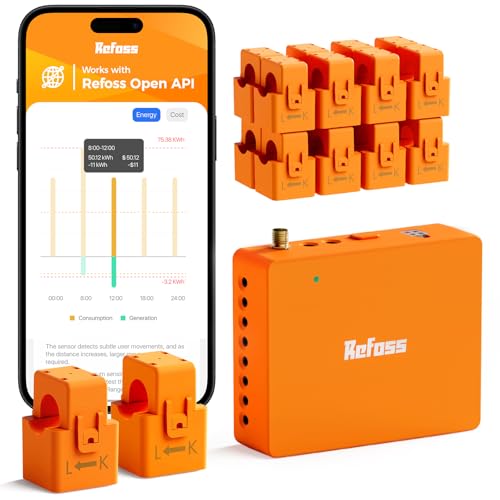
Refoss Smart Home Energy Monitor with 16 60A

Meross Smart Home Energy Monitor

SIEMENS Inhab Smart Home Energy Monitor

Eyedro Smart Home Energy Monitor 200A 2.4GHz
Top 3 Whole-Home Energy Monitors Reviewed
#1 Emporia Vue 3: Best for App Features and Solar
Why We Picked It
The Vue 3 lists clamp-on sensors that install in the circuit panel of most homes, sixteen 50A branch sensors for loads such as the air conditioner, furnace, water heater, washer, dryer and range, and support for single-phase, split-phase and 2-wire systems. It lists accuracy of ±2 percent, UL listing, solar and net metering and an app with automation for time-of-use and peak demand.
It needs 2.4GHz Wi-Fi with an internet connection. Compared with the Refoss and meross it relies more on the maker’s cloud app, but it also has the most established app of the three.
Key Specifications
- Circuit sensors: sixteen 50A
- Systems: single-phase and split-phase, per the listing
- Accuracy: ±2 percent, per the listing
- Certification: UL Listed, per the listing
- Wi-Fi: 2.4GHz with internet
| Pros | Cons |
|---|---|
|
|
Things to Consider
Check that your panel has room and that the sensors fit your wires. The listing says it suits most homes, not all.
Best For
Households that want an established app and solar tracking.
Skip It If
Skip it if you want fully local data.
See the Emporia Vue 3 listing for current details.
#2 Refoss Smart Home Energy Monitor: Best for Local Control
Why We Picked It
The Refoss lists 18 monitored circuits with ±1 percent precision: two main sensors up to 200A and sixteen branch sensors up to 60A. It lists a built-in local web interface, an Open API, MQTT and WebSocket, Home Assistant support and five years of data analytics with minute to yearly history.
The listing states ETL certification and a 2-year warranty, and says it supports single-phase, split-phase and 3-phase 4-wire Wye systems. It weighs 4.27 lb.
Key Specifications
- Circuits: 2 mains up to 200A plus 16 branches up to 60A
- Accuracy: ±1 percent, per the listing
- Local: web UI, Open API, MQTT, WebSocket
- Certification: ETL, per the listing
- Warranty: two years
| Pros | Cons |
|---|---|
|
|
Things to Consider
Local control suits Home Assistant users. Check the installer’s notes for your panel.
Best For
Home Assistant users who want local data and detail.
Skip It If
Skip it if you want the simplest app.
Check the Refoss Smart Home Energy Monitor listing for the latest specifications.
#3 meross Smart Home Energy Monitor: Best for No Subscription and Home Assistant
Why We Picked It
The meross lists sixteen 60A CT sensors, power, voltage, current and power factor readings within ±1 percent, charts by minute through year, local data with no subscription, Home Assistant integration and ETL certification, compliant with UL 61010. It lists a 2-year warranty and weighs about 3.2 lb.
It also supports solar surplus automation through Home Assistant, per the listing.
Key Specifications
- Sensors: 16 x 60A CT
- Accuracy: ±1 percent, per the listing
- Data: local, no subscription
- Certification: ETL, per the listing
- Warranty: two years
| Pros | Cons |
|---|---|
|
|
Things to Consider
Confirm that the sensor size fits your wires and the system type is supported.
Best For
Households that want local data and no fees.
Skip It If
Skip it if you want a cloud-first app.
Review the meross Smart Home Energy Monitor listing for the current specifications.
Other Options Worth Considering
The SIEMENS Inhab monitor lists 16 sensors up to 50A and two 200A main sensors, a mobile app for the USA and Canada, custom alerts and UL listing, with time-of-use, peak-demand and net-metering features. The Eyedro home energy monitor lists two 200A sensors, Wi-Fi or Ethernet and a no-subscription cloud, and measures the whole house only, not individual circuits. The listing says one unit tracks grid or solar, not both at once.
How to Choose a Whole-Home Energy Monitor
Electrical System
Check single-phase, split-phase or 3-phase support against your home.
Circuit Count and Size
More circuits give detail. Check branch sensor size against your breaker sizes.
Local vs Cloud
Local data keeps working without internet and suits Home Assistant. Cloud apps are easier.
Solar and Net Metering
Check whether the monitor handles solar production.
Certification
Look for UL or ETL in the listing.
Installation
Panel work needs a licensed electrician.
How We Evaluate Energy Monitors
We compared manufacturer specifications, listing information and published ratings, weighing circuit count and sensor size, supported systems, stated accuracy, local and cloud features, subscription needs, certifications named, warranty and the clarity of the specifications. Accuracy and certification claims are the sellers’ claims, and we have not measured these monitors ourselves. Confirm compatibility with your panel and utility before you buy.
Frequently Asked Questions
Do I need an electrician?
Yes. Installing a whole-home monitor means clamping sensors inside your electrical panel, which holds live conductors even when the main is off at the service. A licensed electrician should do it, and nobody should open a panel unless they are qualified.
Will it save money?
It shows where power goes, which helps you cut waste. The savings depend on what you find.
Do these need a subscription?
The meross, Refoss and Eyedro listings say no subscription. Check the others.
Can they track solar?
Several list solar or net metering. See each listing.
Is there a cheaper option?
A plug-in watt meter shows one device. See plug-in watt meters.
Final Verdict
The Emporia Vue 3 is the top pick for an established app and solar tracking, the Refoss suits local control, and the meross suits no-subscription Home Assistant setups.
Before buying, check your panel and system type, and compare more options in our energy monitors category.
About the author

The Home Power Up team researches and writes buying guides on portable power stations, solar, generators and home backup power. We compare manufacturer specifications, listing details and published ratings to help US homeowners choose gear. We do not test products ourselves, and we explain our method in How We Review.